
I want to keep up without trying everything.
I like discovering what new technology makes possible. But between AI releases, SaaS updates & the constant stream of opinions about both, keeping up can feel like work in itself. I want a way to stay curious without giving every announcement my attention.
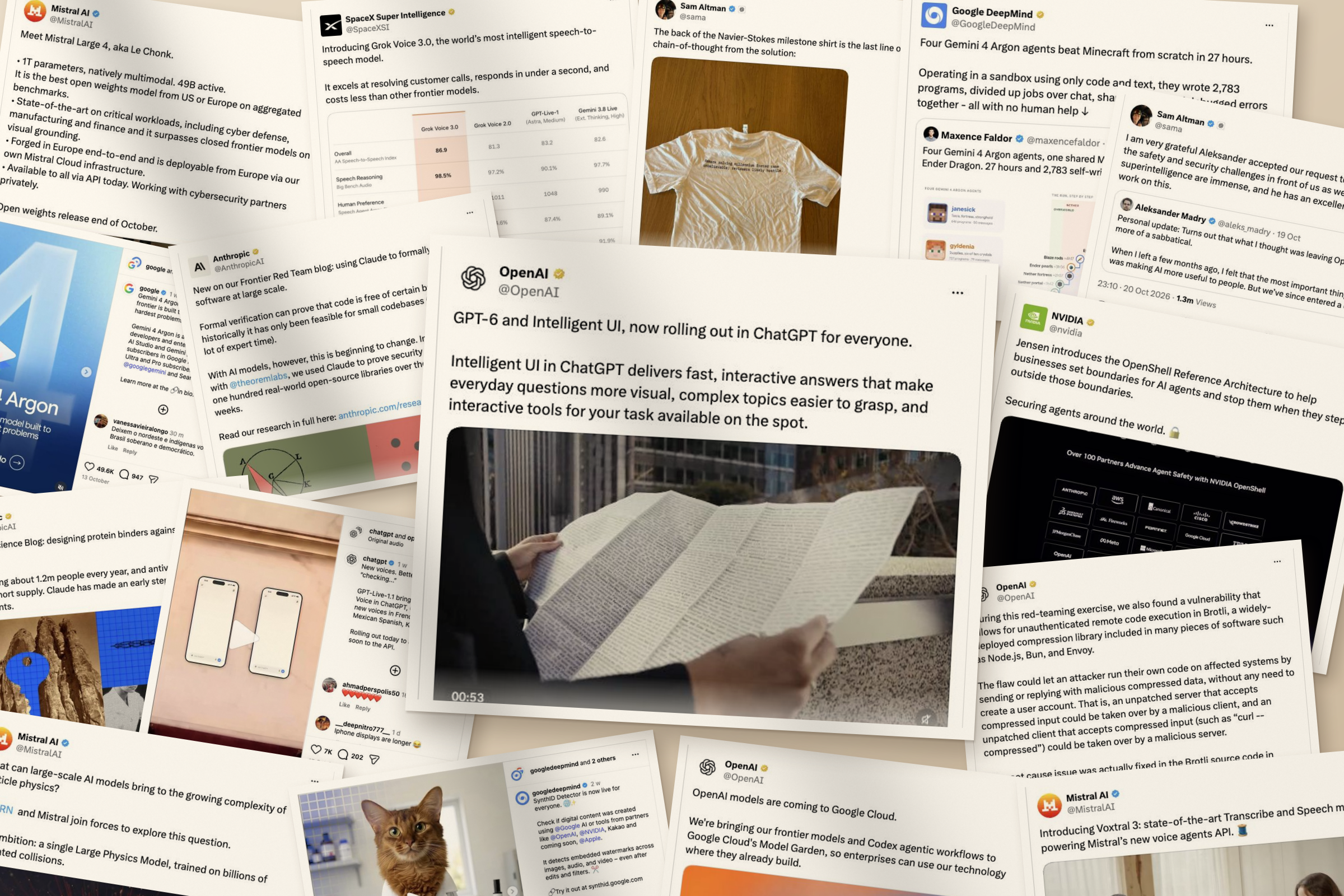
One post announces a new AI model. The next shows an agent handling a whole workflow, followed by a SaaS update & a research result. On X, Instagram & in newsletters, there is always something else to catch up on. Even a quick look can become a list of things to read, compare & try. I’m interested in much of it. But a breakthrough, a small product improvement & a convincing sales pitch can look equally urgent in a feed. It can be hard to tell what matters while the next announcement is already arriving. That is the part I find tiring: the feeling that I should understand all of it before I can decide what to leave alone. The tools themselves keep changing, too. An update can give a familiar tool something I might otherwise look for elsewhere. A new platform might help, but it also means an account to create & a way of working to learn. Those decisions take attention I also need for the work in front of me.
I’ve set up a weekly research brief to help me make that first selection. It looks for new tools, updates to the ones I use & developments that could affect my work. I ask for no more than three things worth considering. If there’s nothing particularly useful, it can leave the list empty. The limit is there to make the result manageable. For the brief to be useful, it needs to know how I work. A new release might be interesting without being useful for the way I work right now. For each suggestion, I ask what changed, why it might be useful & what the limitation is. I want a link to the original announcement or documentation, with a date. A feature that’s available now is different from something promised for later. I also ask it to check whether a tool I already use can do the same thing.
I want to spend more time using a good tool than looking for the next one.
If you want to try this yourself, start with a short brief like this:
Look through the past week’s tools & updates relevant to [my work]. I already use [my tools]. Choose at most three developments that could help with [a task I want to improve]. Explain what changed, why it matters, one limitation & whether it’s available now. Link to dated original sources. Check whether my existing tools already do this. Suggest one thing I could test in 20 minutes. Leave the list empty if nothing is worth my time.
Be specific about what you want help with. Someone running a small business will need a different shortlist from someone making interactive websites. Give it that context & adjust the brief when the suggestions feel too broad. I don’t expect a weekly brief to make me fully up to date. I want it to help me choose what is worth a closer look & feel comfortable leaving the rest for now. That leaves room for the books, conversations & unexpected ideas that also shape my work. I can be interested in where technology is going without treating every release as something I need to try.


