Octrace
- Industry
- Sales Intelligence • B2B SaaS • AI
- Product
- AI-powered Sales Intelligence Platform
- My Role
- Product Designer
- Team
- Viktoria Izdebska (CEO)
Timo Luick (CTO)
Nadja Kohlberger (Product Designer)
Lukas Mascha (Developer)
Maximilian Gierlachowski (Developer)
Granit Mavraj (Developer)
Steven Ludwig (Developer)
Octrace Sales Team - Skills
- Product Strategy • User Flows • Information Architecture • Design Systems • Dashboard Design • Product Analytics • User Testing
- Tools
- Figma Make
- Figma
- FigJam
- PostHog
- Notion
- Storybook
- GitHub
- Slack
- Platform
- Web Application
- Status
- Early beta-customers, before the company closed
Sales Intelligence Platform for Smarter Lead Generation
How thoughtful UX, AI and data visualization helped sales teams turn complex company data into qualified leads faster.
Challenge
Finding potential customers has never been easier, yet qualifying them still requires a surprising amount of manual work. Sales teams often switch between multiple tools to research companies, enrich data and build lead lists before they can even start reaching out.
The challenge was turning millions of company records into a product that helps users quickly identify relevant leads, discover patterns and make confident decisions without feeling overwhelmed.
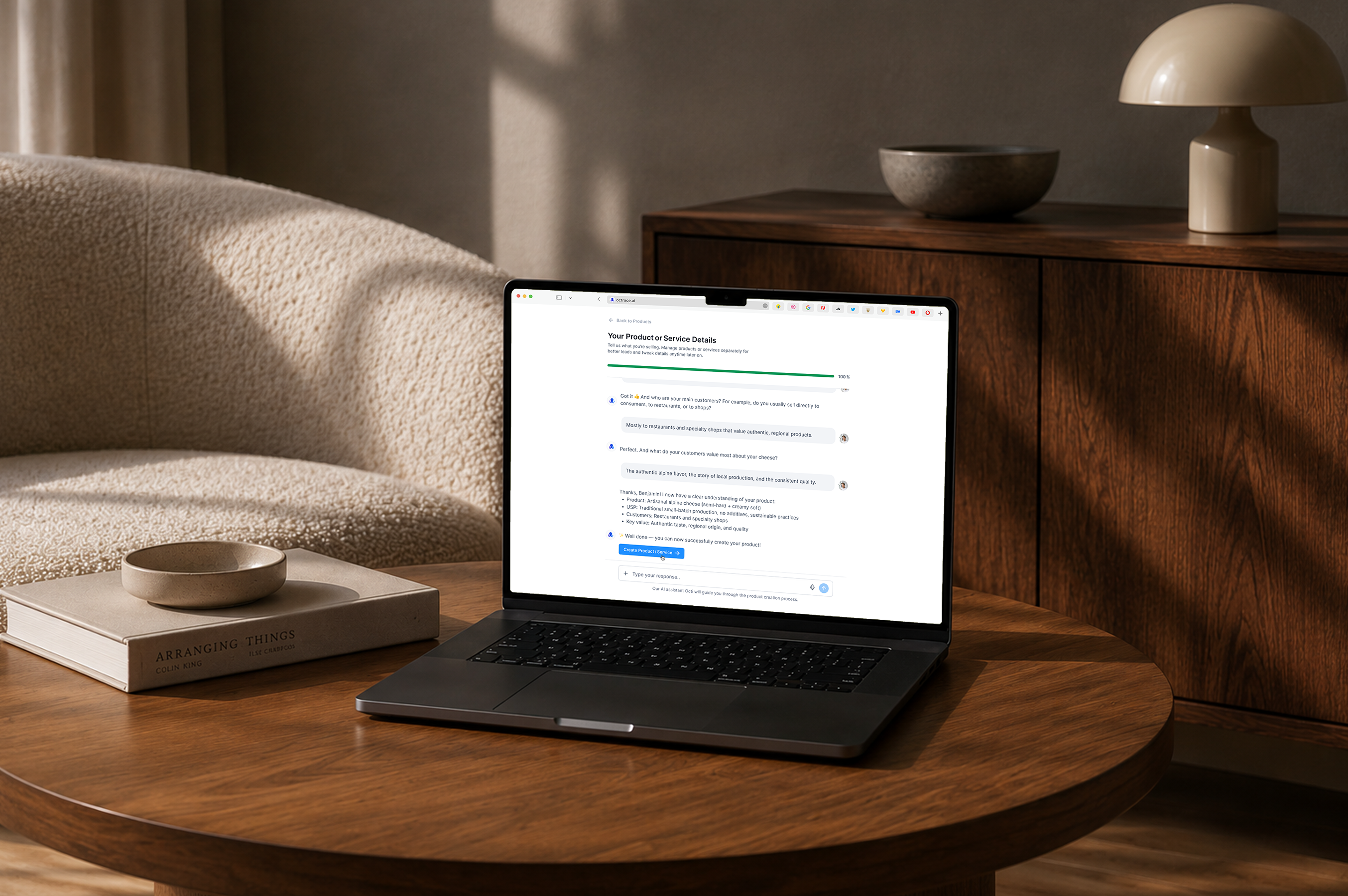
As the product evolved, we also explored how AI could simplify repetitive research. Instead of manually enriching company data, users could simply ask questions in natural language.
Product Strategy
Octrace was designed to help sales teams discover and qualify companies before making first contact. Every design decision focused on one goal: helping users move from large amounts of raw company data to clear, actionable insights as quickly as possible.
The platform had to support experienced sales teams working with thousands of companies while remaining approachable for new users. We prioritised clarity, flexibility and speed over visual complexity.
Key Decisions
Design for fast scanning
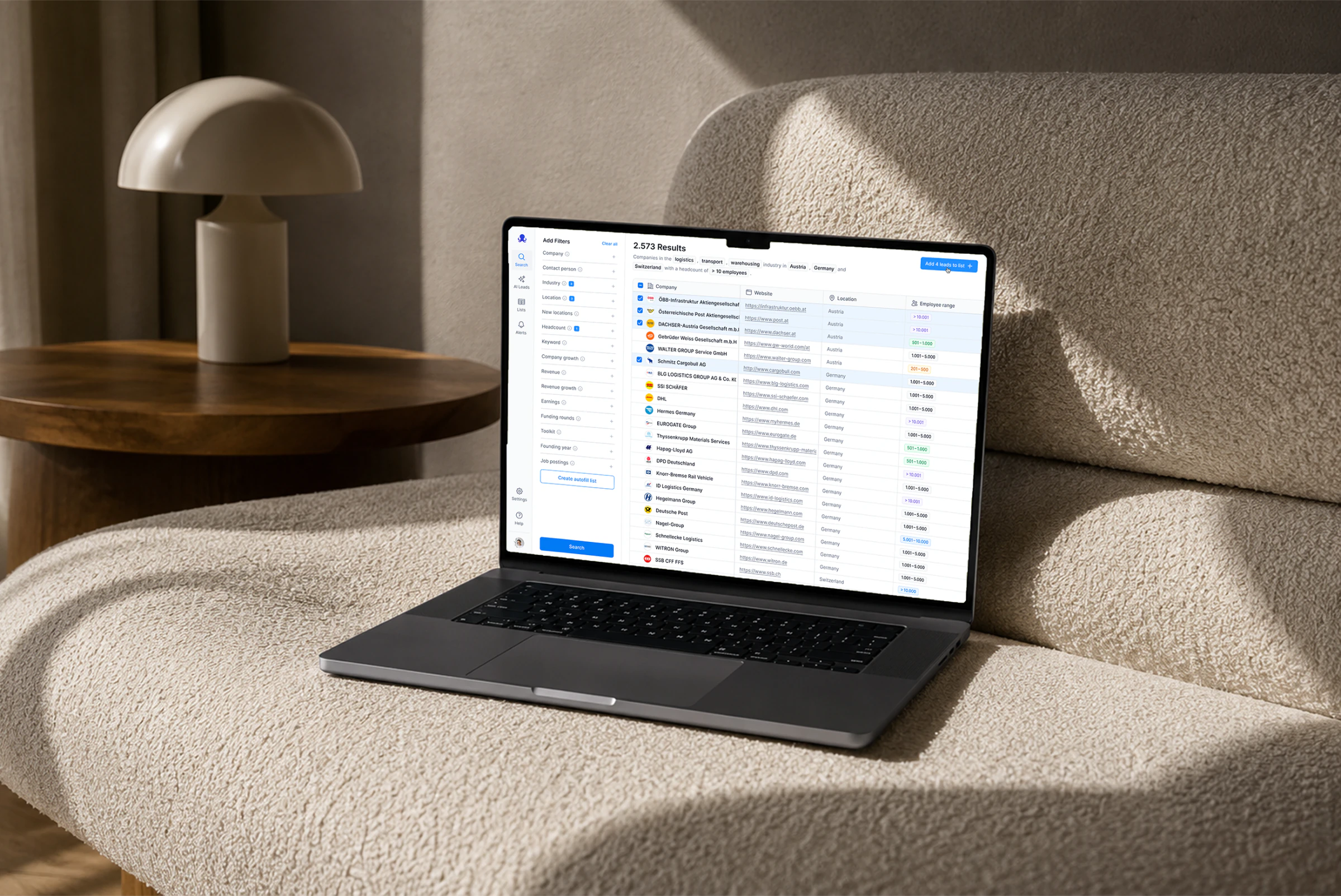
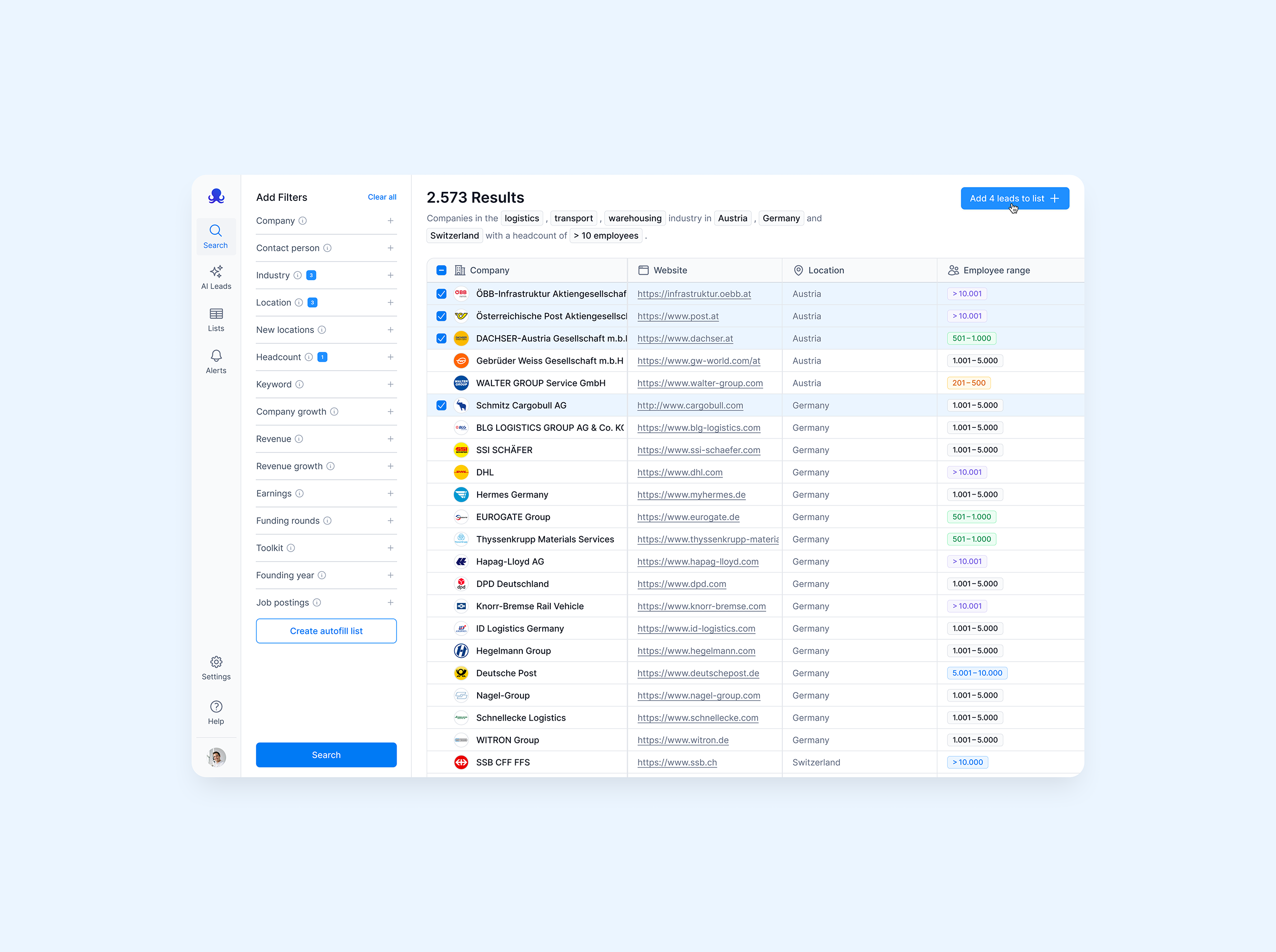
The main workspace contained thousands of companies and dozens of data points. Instead of treating it like a spreadsheet, I designed the interface around visual hierarchy, making large datasets easy to scan while keeping the most important information immediately visible.
Flexible data exploration
Every sales team qualifies leads differently. Rather than forcing a fixed workflow, users could customise filters, columns and search criteria to match the way they already worked.
AI-powered data enrichment
One of the most exciting features we explored allowed users to create entirely new company attributes using natural language. Instead of manually researching hundreds of companies, users could simply ask questions like “Is this company B2B or B2C?” and Octrace generated a structured column for every selected company. Our goal wasn’t to teach users prompt engineering. It was to make AI feel like a natural part of the workflow.
A scalable design system
As new features were added, consistency became increasingly important. I designed a reusable design system covering components, layouts, tables, navigation and interaction patterns. It made the product easier to scale while creating a consistent experience across every screen.
Experience
When I joined Octrace, the company had no digital product. The business relied on a traditional sales process supported by a simple marketing website. Together with the CTO, I helped shape the product vision from the ground up, mapped the first user flows and planned the product roadmap before development began.
As the platform evolved, it became a data-heavy Sales Intelligence platform that helped teams research, qualify and manage potential customers. The biggest UX challenge was making large amounts of company data easy to navigate without overwhelming users. This influenced many of the product decisions around information architecture, dashboard design and interaction patterns.
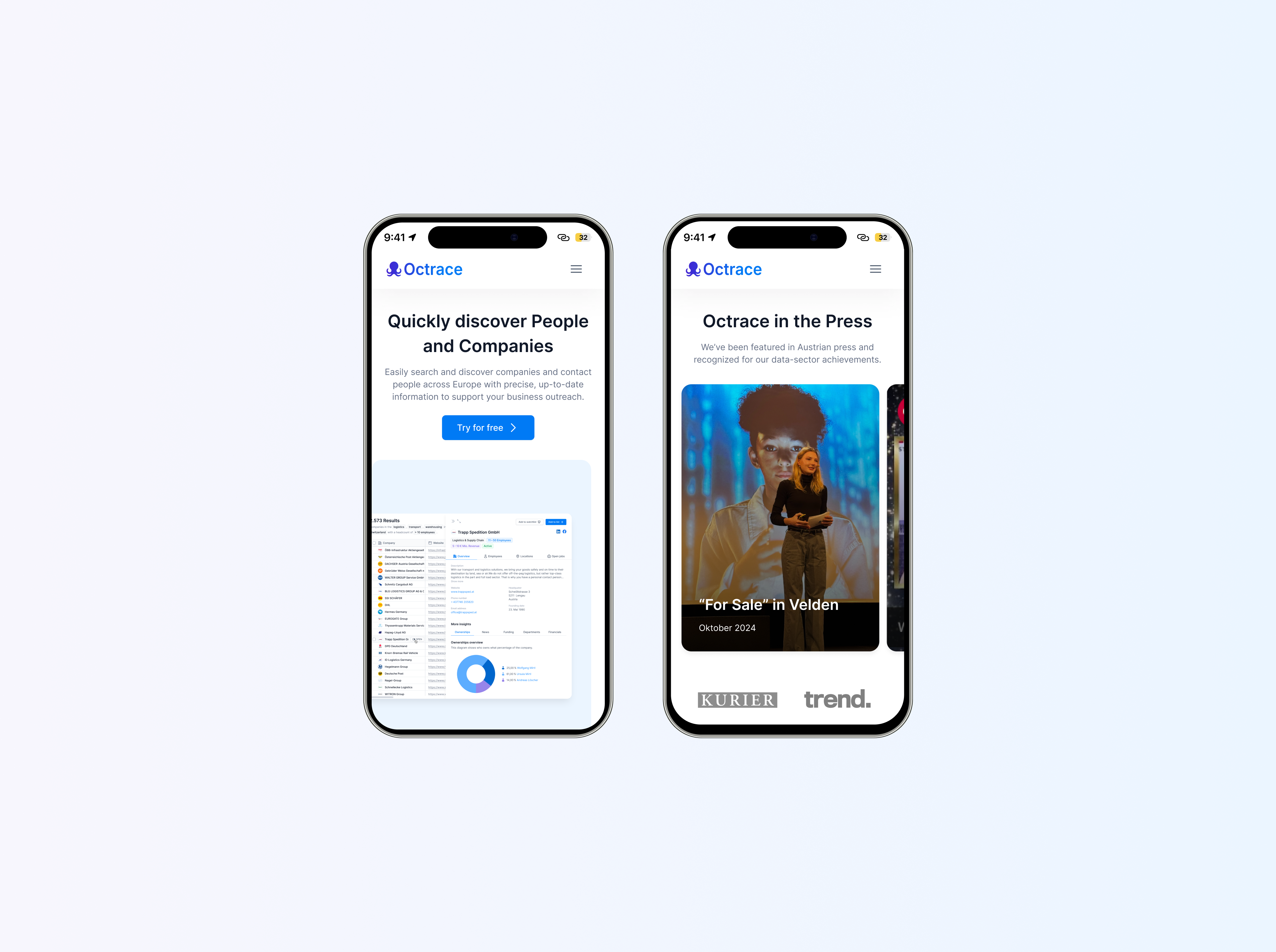
Alongside the product, I also designed the Octrace marketing website, creating a consistent visual language across both the platform and the company’s external presence.
Contribution
As Product Designer, I was responsible for the end-to-end product design, from early product concepts to production-ready interfaces. My work included UX research, information architecture, dashboard design, a scalable design system and interaction concepts. I worked closely with developers throughout implementation to refine interactions and ensure a consistent experience across the platform.
Beyond the product itself, I contributed to the company’s rebranding and designed the new marketing website, helping create a consistent visual identity across both the product and the brand.
One of the biggest advantages of working in a small team was the opportunity to test the product directly with colleagues and early customers throughout development. Combined with product analytics in PostHog, this allowed me to observe user behaviour, identify friction points and validate design decisions using both qualitative feedback and real usage data. The platform reached early customer validation before the company unfortunately closed, giving us the opportunity to continuously improve the product through rapid feedback loops.
Reflection
Designing Octrace deepened my understanding of information architecture, cognitive load and minimalist interface design. Working on a product that displayed thousands of companies and dozens of data points taught me that every interface element has a cognitive cost. Every additional column, filter or chart asks users to process more information.
The real challenge wasn’t fitting more data onto the screen. It was deciding what users needed to see first, what could remain hidden until needed and how to create a clear visual hierarchy that supports fast decision-making. I learned that simplicity isn’t about removing functionality. It’s about reducing unnecessary complexity without limiting what expert users can do.
Next project
Keep exploring work
Hydrofy